
-
Mocha Travertine Vessel Sink
Regular price $850.00Regular price -
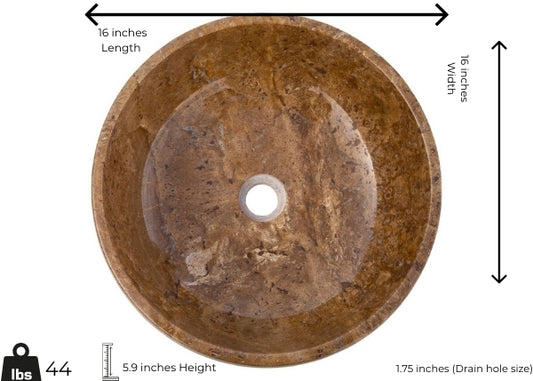
Dark Travertine Vessel Sink
Regular price $750.00Regular price -
Custom Travertine Sink
Regular price From $900.00Regular price -
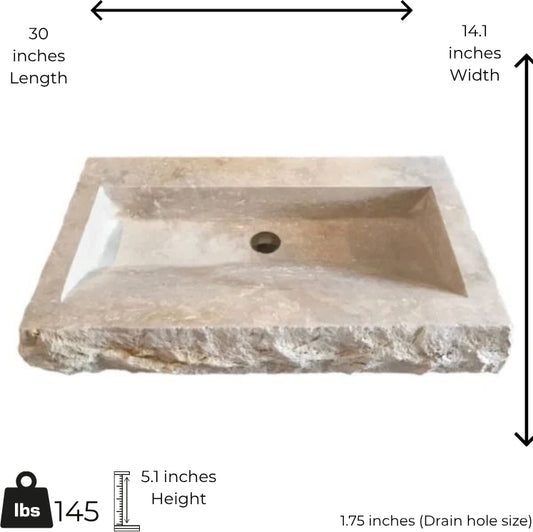
Troia Travertine Trough Sink
Regular price $950.00Regular price -
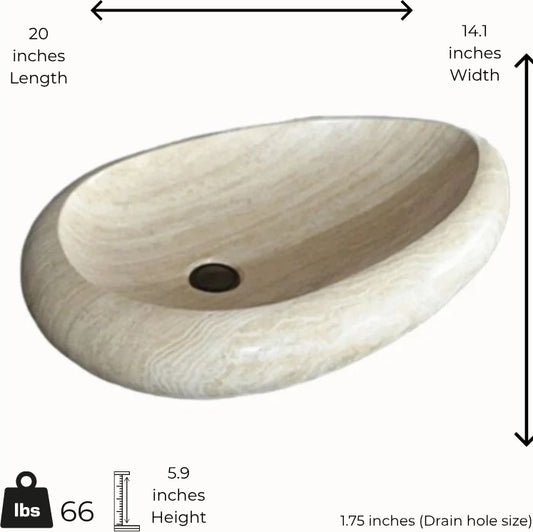
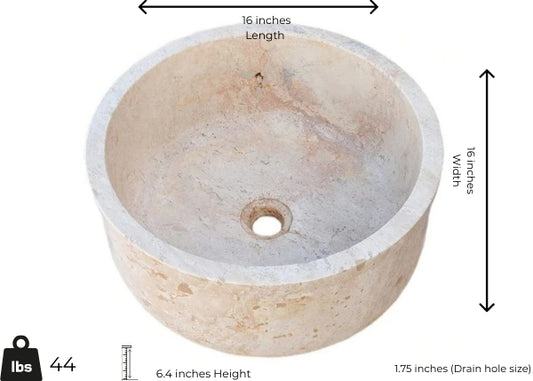
Light Travertine Vessel Sink
Regular price $800.00Regular price -
Troia Light Travertine Sink
Regular price $1,100.00Regular price -
Drop-Pattern Travertine Sink
Regular price $800.00Regular price -
Troia Marble Sink
Regular price $2,700.00Regular price -
Noce Travertine Vessel Sink
Regular price $900.00Regular price -
Beige Travertine Polished Sink
Regular price $750.00Regular price -
Light Travertine Sink 21.7"
Regular price $1,000.00Regular price -
Troia Travertine Sink 27.5"
Regular price $750.00Regular price -
Beige Travertine Honed Sink
Regular price $650.00Regular price -
Red Travertine Vessel Sink
Regular price $750.00Regular price















Frequently asked questions
What is travertine?
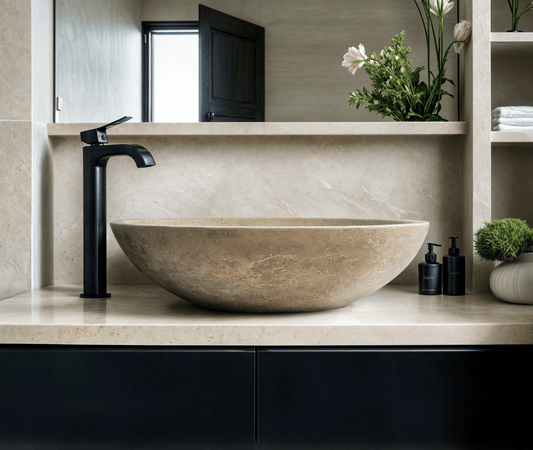
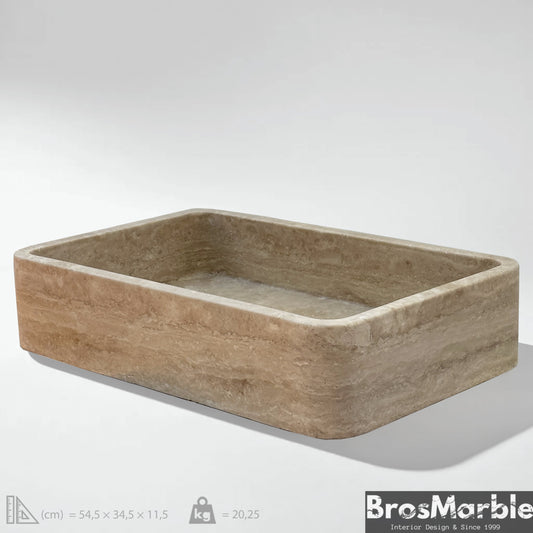
Travertine is a limestone formed in mineral springs, recognisable by the fine natural pores that run through it in layers.
Is travertine good for a sink?
Yes, provided the pores are filled and honed and the stone is sealed. It is a good basin material and a poor wet-room floor material, for the same reason in both cases: the natural voids.
What is the difference between travertine and marble?
Travertine forms in springs and keeps open pores; marble is metamorphosed limestone with a denser, closed structure. Travertine reads warmer and softer, marble holds a sharper edge and a deeper polish.
How do I care for a travertine basin?
Seal it on installation and reseal annually. Keep citrus, wine and descaling products off the surface and wipe spills rather than letting them stand.